
1.Introduction to Guidewire Testing and STLC
Guidewire Testing is a specialized software testing process used to validate Guidewire InsuranceSuite applications, including PolicyCenter, ClaimCenter, and BillingCenter. It ensures that insurance workflows, business rules, integrations, and system functionality perform accurately before deployment. The Software Testing Life Cycle (STLC) provides a structured framework for planning, designing, executing, and completing testing activities efficiently. Following the Guidewire Testing STLC Process helps testing teams identify defects early, improve software quality, and ensure compliance with business requirements. Whether performing Guidewire manual course or automation testing, understanding each STLC phase is essential for delivering reliable insurance applications. Enrolling in Guidewire Testing Online course helps learners gain practical experience, real-time project exposure, and the skills needed to build a successful career in Guidewire testing.
2.What Is the Software Testing Life Cycle (STLC)?
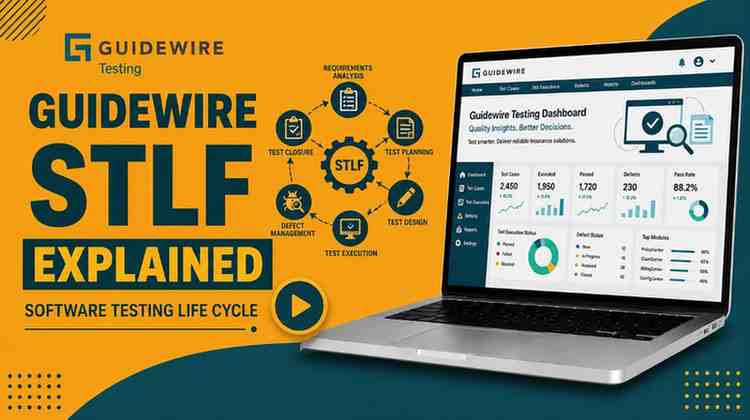
The Software Testing Life Cycle (STLC) is a systematic process that defines the different phases involved in software testing to ensure an application meets quality standards. It includes Requirement Analysis, Test Planning, Test Case Development, Test Environment Setup, Test Execution, Defect Reporting, and Test Closure. In Guidewire projects, the Guidewire Testing STLC Process helps testers validate insurance applications such as PolicyCenter, ClaimCenter, and BillingCenter with accuracy and efficiency. By following each phase, teams can identify defects early, reduce project risks, and improve software reliability. Professionals can enhance their skills through Guidewire Testing Online course which provides practical knowledge of STLC, while Guidewire Manual Testing helps testers verify business workflows and application functionality effectively.
3.Why STLC Is Important in Guidewire Testing
The Software Testing Life Cycle (STLC) is essential in Guidewire Testing because it provides a structured approach to testing insurance applications such as PolicyCenter, ClaimCenter, and BillingCenter. Each phase of the Guidewire Testing STLC Process ensures that business requirements are thoroughly analyzed, test cases are accurately designed, defects are identified early, and software quality is maintained throughout development. A well-defined STLC minimizes project risks, reduces testing time, and improves application performance before deployment. It also ensures that critical insurance workflows function correctly and meet business expectations. By enrolling in Guidewire Testing Online Course learners gain practical knowledge of STLC, while Guidewire Manual Testing skills help validate application functionality, usability, and business processes with greater accuracy.
4.Requirement Analysis Phase in Guidewire Testing
The Requirement Analysis phase is the foundation of the Software Testing Life Cycle (STLC) in Guidewire Testing. During this stage, testers review business requirements, functional specifications, user stories, and insurance workflows to understand the application’s expected behavior. They identify testable requirements, clarify ambiguities with business analysts, and determine the testing scope for modules such as PolicyCenter, ClaimCenter, and BillingCenter. A thorough Guidewire Testing STLC Process helps ensure complete test coverage and reduces the risk of defects later in the project. Learning this phase through Guidewire Testing Online Course enables professionals to analyze requirements effectively, while Guidewire Manual Testing techniques help validate business rules and ensure the application meets client expectations before development progresses.
Need Demo session? Let’s Connect
5.Test Planning Process for Guidewire Applications
The Test Planning phase is a critical step in the Software Testing Life Cycle (STLC) for Guidewire applications. During this stage, the testing team defines the testing scope, objectives, strategy, resources, timelines, and required testing tools. Test leads also identify potential risks, estimate testing efforts, and prepare the test plan document to ensure smooth execution. A well-structured Guidewire Testing STLC Process helps teams perform systematic testing of PolicyCenter, ClaimCenter, and BillingCenter while maintaining quality standards. Professionals can strengthen their planning and testing skills through Guidewire Testing Online Training, which provides real-time project experience. Additionally, Guidewire Manual Testing enables testers to verify business requirements, insurance workflows, and application functionality effectively before moving to the execution phase.
6.How to Design Effective Test Cases for Guidewire
Designing effective test cases is essential for ensuring the quality and reliability of Guidewire applications. Test cases should be based on business requirements, functional specifications, and real-world insurance workflows. Each test case must include clear preconditions, test steps, expected results, and actual outcomes for accurate validation. Testers should cover positive, negative, boundary, and integration scenarios for modules such as PolicyCenter, ClaimCenter, and BillingCenter. Following the Guidewire Testing STLC Process ensures complete test coverage and helps identify defects early in the development cycle. Enrolling in Guidewire Testing Online Training provides hands-on experience in creating industry-standard test cases, while Guidewire Manual Testing skills enable testers to validate application functionality and business rules with confidence.
7.Setting Up the Guidewire Testing Environment
Setting up the Guidewire Testing Environment is a crucial phase in the Software Testing Life Cycle (STLC). A properly configured environment allows testers to validate Guidewire applications such as PolicyCenter, ClaimCenter, and BillingCenter under real-world conditions. This phase includes installing the required software, configuring databases, integrating third-party systems, preparing test data, and verifying server connectivity. A stable testing environment ensures accurate test execution and helps identify defects before production deployment. Following the Guidewire Testing STLC Process minimizes environment-related issues and improves overall testing efficiency. Through Guidewire Testing Online Training, learners gain practical experience in configuring testing environments, while Guidewire Manual Testing helps validate business workflows, application performance, and system functionality in a controlled setup.
8.Executing Test Cases in Guidewire Testing
The Test Execution phase is one of the most important stages of the Software Testing Life Cycle (STLC) in Guidewire Testing. During this phase, testers execute the prepared test cases to verify that Guidewire applications, including PolicyCenter, ClaimCenter, and BillingCenter, function according to business requirements. The actual results are compared with the expected results, and any deviations are reported as defects for further analysis. Following the Guidewire Testing STLC Process helps ensure complete test coverage, improves software quality, and identifies issues before deployment. Professionals can master this phase through Guidewire Testing Online Training, where they gain hands-on experience with real-time projects. Guidewire Manual Testing also plays a vital role in validating insurance workflows, integrations, and critical business functionalities.
9.Defect Reporting and Bug Tracking in Guidewire Projects
Defect reporting and bug tracking are critical activities in the Software Testing Life Cycle (STLC) for Guidewire projects. During this phase, testers identify defects while executing test cases and record them with detailed information, including the defect description, severity, priority, steps to reproduce, expected results, and actual results. Bug tracking tools such as Jira or Azure DevOps help teams monitor defect status until resolution. Following the Guidewire Testing STLC Process ensures that every issue is documented, assigned, fixed, retested, and closed efficiently. Enrolling in Guidewire Testing Online Training helps learners understand industry-standard defect management practices, while Guidewire Manual Testing enables testers to identify functional issues, validate fixes, and ensure Guidewire applications meet business and quality requirements.
Need Demo session? Let’s Connect
10.Regression Testing and Retesting in Guidewire STLC
Regression testing and retesting are essential phases of the Software Testing Life Cycle (STLC) in Guidewire projects. Retesting verifies that previously reported defects have been fixed successfully by executing the failed test cases again. Regression testing ensures that recent code changes or bug fixes have not impacted existing features or introduced new defects. In Guidewire applications such as PolicyCenter, ClaimCenter, and BillingCenter, regression testing helps maintain application stability and business continuity after every update. Following the Guidewire Testing STLC Process improves software quality and minimizes production issues. Professionals can learn these techniques through Guidewire Testing Online Training, while Guidewire Manual Testing enables testers to validate critical insurance workflows, integrations, and core functionalities with confidence before deployment.
11.Test Closure Activities and Documentation
The Test Closure phase is the final stage of the Software Testing Life Cycle (STLC) in Guidewire Testing. During this phase, the testing team confirms that all planned test cases have been executed, defects have been resolved or documented, and testing objectives have been achieved. Testers prepare important documents such as the test summary report, defect analysis report, test metrics, and lessons learned to evaluate the overall testing process. These documents help improve future Guidewire projects and ensure compliance with quality standards. Following the Guidewire Testing STLC Process ensures proper project completion and maintains comprehensive testing records. By enrolling in Guidewire Testing Online Training, learners gain practical knowledge of test closure activities, while Guidewire Manual Testing helps ensure all business requirements have been successfully validated before release.
12.Best Practices for Guidewire Testing Throughout the STLC
Following best practices throughout the Software Testing Life Cycle (STLC) helps ensure the successful delivery of high-quality Guidewire applications. Testers should begin by thoroughly understanding business requirements and creating detailed test cases that cover functional, integration, and regression scenarios. Maintaining accurate test data, using a stable test environment, and tracking defects effectively are also essential for successful testing. Regular communication between testers, developers, and business analysts helps resolve issues quickly and improves project quality. Adhering to the Guidewire Testing STLC Process ensures complete test coverage and reduces production risks. Enrolling in Guidewire Testing Online Training equips professionals with practical skills, while Guidewire Manual Testing enables them to validate insurance workflows, business rules, and application functionality with greater accuracy and confidence.
13.Common Challenges in Guidewire Testing and Their Solutions
Guidewire Testing presents several challenges due to the complexity of insurance applications and business workflows. Common issues include incomplete requirements, complex integrations with third-party systems, inconsistent test data, frequent application updates, and limited testing environments. These challenges can lead to missed defects, delayed releases, and increased project risks. To overcome them, teams should perform detailed requirement analysis, create comprehensive test cases, maintain realistic test data, and use effective defect tracking practices. Regular collaboration between testers, developers, and business analysts also improves testing accuracy and project quality. Following the Guidewire Testing STLC Process helps address these challenges efficiently. Enrolling in Guidewire Testing Online Training provides practical experience, while Guidewire Manual Testing equips professionals with the skills needed to validate Guidewire applications successfully.
14.Career Opportunities for Guidewire Testing Professionals
The demand for Guidewire Testing professionals is growing as insurance companies continue to implement Guidewire InsuranceSuite applications such as PolicyCenter, ClaimCenter, and BillingCenter. Skilled testers are required to ensure these applications meet business requirements, perform efficiently, and deliver a seamless user experience. Career opportunities include roles such as Guidewire Tester, QA Analyst, Test Engineer, Automation Tester, Senior QA Engineer, and Test Lead. Professionals with strong domain knowledge, STLC expertise, and testing skills are highly valued by leading IT and insurance organizations. Enrolling in Guidewire Testing Online Training helps learners gain practical experience and industry-relevant skills. Understanding the Guidewire Testing STLC Process and mastering Guidewire Manual Testing significantly improve career prospects, salary potential, and long-term growth in the insurance technology industry.
15.Why Choose Hope Infotech for Guidewire Testing Training
Hope Infotech is a trusted training institute offering comprehensive Guidewire Testing programs designed for students, job seekers, and working professionals. Our course covers the complete Software Testing Life Cycle (STLC), Guidewire InsuranceSuite modules, real-time project experience, and industry-standard testing practices. Learners receive hands-on training from experienced instructors, practical assignments, interview preparation, certification guidance, and placement assistance to become job-ready. The curriculum is regularly updated to match current industry requirements and includes both manual and real-world testing scenarios. By enrolling in Guidewire Testing Online Training, you gain practical expertise and confidence to work on live projects. Our focus on the Guidewire Testing STLC Process and Guidewire Manual Testing ensures you develop the technical skills needed for a successful career in Guidewire Testing.